Showing posts with label bob. Show all posts

Saturday, July 5, 2025

Al's Birthday Review: Daughter of Horror

Hey, everyone - Bob here, for the annual test of my friendship with Al. 

This year, he's given me an odd little film: Daughter of Horror.


Daughter of Horror, by my understanding, is a re-release of the 1955 film Dementia, which was originally going to be released in 1953 but was banned by the New York State Film Board. 

Al will probably kill me if I don't also mention that this film was also featured in the 1958 film The Blob (Crisis averted then).

It was also purchased, re-edited, and re-released with added narration. 

Notably, the narration - per Wikipedia, anyway - was done by Ed McMahon. Yes, that Ed McMahon, Johnny Carson's buddy on The Tonight Show. The re-release date is unclear - the actual film's page claims it was re-released in 1957, but Ed McMahon's page claims 1970.

No offense to Ed McMahon, who does a stellar job with the actual voiceover work for the narration, but the addition of narration was, in general, a really bad idea that takes a weird but intriguing film and basically spells out what's happening to make sure you don't miss details that were perfectly well presented to begin with. 

Now, if they'd wanted to add narration to Hard to Be a God, that I would've liked!

Literal first thing you see. This...felt like a bad sign.

However, this is kind of a dreamlike, experimental film, so despite the above, there's some parts you can still interpret multiple ways.

The film is also mostly a silent film, with no dialogue whatsoever except for the narration added to this version, and only a few bits of other vocalizations - wordless laughter and crying. Other than that, you're just in the company of the soundtrack for the rest of the film. This, obviously, contributes to the dreamlike atmosphere and opens events to interpretation, as for the most part you have to judge what's happening purely based on visuals. 

To be clear, I don't mean "silent film" as in "there is dialogue but it appears as text on screen." I mean that there's no dialogue whatsoever in any form.


In any case, in brief, here's the concept: The movie follows one night in the life of a woman who appears to be insane, suffering from hallucinations and unsettling behaviors. It is less a straight plot than a look at madness, and it is unclear how much or how little of the film actually happens. 

Some scenes are blatantly dreams or hallucinations (especially when the narrator just outright says so like we can't figure it out), while others may have happened, or may be her imaginings.


I'll briefly summarize what appears to occur. Obviously, spoiler warning...such as it is. Seriously, though - if anything that I said above sounded interesting, and you're willing to deal with a short-but-slow film with some too-blatant narration to see what it's about, you may wish to watch the film before reading anything below as it probably plays better going in with less knowledge.

Otherwise, carry on.

Oh no, I'm totally in the same shot as this wave! Please ignore how you can see it through my head!

The woman has a dream about drowning, then wakes, takes a switchblade, and goes out on the town. She encounters various people, is attacked by a drunk and rescued by a cop who beats the drunk to death, and is accosted by a man who gets her to come with him to a rich man he appears to work for. 

She goes out for a night on the town with the rich man, flashes back to when she killed her drunk and abusive father for killing her mother (an adulteress), then is largely ignored by the rich man at home until he comes over to try to kiss her (apparently treating her like a prostitute), at which point she stabs him. He grabs her necklace and plummets out the window, and she flees, seen by multiple people, and tries to get it back from his corpse, but it's holding on too tightly so she uses her switchblade to cut his hand off and takes both, then hides them in a flower seller's basket. 

Then, she flees from the pursuing police into a nightclub (which we are blatantly told is a hallucination), until she is caught and hallucinates everyone knowing what she did, including her victim laughing at her. Then she wakes up in bed...but sees the hand and pendant in her dresser.


You'll notice that that's not really a ton of plot. Indeed, this is a fairly short film, just shy of an hour long. I'd argue it could've been even shorter, as there's a lot of scenes or shots that just drag on for a very long time - some for stylistic reasons, but still. I think you could cut this down by a good twenty minutes and not lose much of anything. 

It just takes far too long to get to things sometimes, especially when it is obvious what's going to happen - for instance, it's about twenty minutes of the runtime between her meeting the rich man and her killing the rich man, and it's pretty obvious from the first second of their time together that that's where this is going. They just drag it out over several scenes of them in the car, attending a restaurant, attending a club, and spending time at his (very fancy) apartment. It just keeps going. 

We even watch the rich guy eating chicken wings for two thirds of eternity.

I'm just as bored by this as you are, lady.

That said...it's still quite an interesting film. The acting is all terrifically strange in just the right way for this. The lead, Adrienne Barrett, does a particularly tremendous job of acting just a bit off - her reactions to people feel just slightly unsettling, she smiles at weird times and in strange manner, she holds her gaze on things for just a few seconds too long, that sort of thing. 

Her late-film freakouts are also terrific. She's really very good in the role and holds the viewer's attention well, which is a good thing since she's in the vast majority of shots in the film and has to communicate a great deal through just expression and movement. 

She's a major contributor in the film setting its mood and atmosphere extremely well.


The cinematography is also worthy of praise - there's a lot of great shots in this film that set a dark and twisted atmosphere and make things feel just a bit wrong, a bit confused and unreal. It makes excellent use of light and shadow, and of set design, to communicate that the world is not quite being seen truthfully and to add a touch of intimidation and danger to just about every moment. 

No shot feels like it's taking place in true safety - it either feels actively frightening, at least unsettling, or just confused and wrong, but all clearly intentionally so.

The film also makes use of a lot of visual symbolism - for instance, the police detective who keeps showing up throughout the film in various places, sometimes in direct pursuit of the lead and sometimes just seemingly in the same place, is the same actor who plays the lead's alcoholic and abusive father that she killed in her past - a literal representation of her past haunting her constantly. (It would be perhaps more impactful if that fact wasn't lampshaded so blatantly by the narration midway through, which outright states: "...behind you, the policeman with the face of your father, the face of your first victim, pursuing you relentlessly in your haunted brain...")


Seriously, the narration really screws with this film. Sorry, Ed. It isn't as bad as Scared to Death, but it just feels like it was added because people didn't feel like the original film was interpretable, in which case...maybe just don't re-release it? 

The whole point of this film is to be weird and make you second-guess what you are seeing and figure out what it means - adding something that just tells you what it means kind of invalidates the movie as a whole.


I also really loved how they presented the flashback to the death of her parents - it's a little on the nose, but a really fun and artistic presentation. Rather than flashing back to her childhood home, the film flashes to a graveyard, where a tall man in a suit with a mask on shows her visions of her parents and their deaths...which are done very stage style by just adding home props and furniture to the graveyard itself. 

Slender Man version 0.12a?

The mother even falls dead right in front of the tombstone reading "Mother," which is admittedly kind of direct but does get the point across. Credit to them for the overall sequence, which was a visually interesting and unusual way of presenting the concept.

Really, that's the way of things with this film - it has a lot of visually interesting, creative presentation, marred by a longer-than-necessary runtime (even for its short length), overly blatant narration, and a few outright silly bits that could perhaps be excused as representations of the lead's madness, but really are probably artifacts of the time or just some poor filmmaking creeping in. Most notable for that is the bit involving her trying to get her pendant back from the rich man's corpse: When we first see it held in his hand, it's held very loosely, but when she goes to take it, it is gripping the pendant tight, so she has to cut the hand off. With a switchblade. Which seems difficult, and likely to leave even more evidence on the area and your person than just leaving the pendant. 

By the way, maybe don't cut off the whole hand but just a finger or two to get the pendant? Not that I've thought about this sort of thing.


Then, she has an entire chase sequence through town, keeping the hand on her person the whole time, and somehow has no blood whatsoever on her. 

Again, you could argue that it's a hallucination thing, but...really, I think it might be more an artifact of this being a 1950s film and not wanting / being allowed to show much gore. There is a bit of blood on the mother's hand in her death scene, but not much beyond that. 

It doesn't matter much to the plot anyway since some or all of that may not even be happening, but still.

Cool artistic "followed by spotlight" shots, though.

Otherwise, the only remaining major criticism I have to present is the soundtrack, which is just aggressively dreamlike and ethereal in a way that starts out interesting and quickly becomes annoying, largely because the same sequence of notes repeats over and over and over and over in the film with very little variation for most of its runtime. It sounds like the theme they'd use for strange and fascinating parts of alien planets in the original Star Trek - high, airy female singer singing wordlessly, ascending and descending note runs, that sort of thing. 

It's good! 

Until you hear it for nearly an hour straight, broken only by a big band number late film. It's the voice version of the soundtracks to Rollergator or Mesa of the Lost Women.

Bruno VeSota, whose performance here strangely reminded me of Orson Welles' in The Trial.

Honestly, there's more I could say, but I kind of want to leave it there. This is not a bad film, though I suspect the original version might have been superior - I'm not sure what other than the narration (which was a bad choice) was adjusted in this one, so it's possible this improved it in some ways and hurt it in others, or that is was just hurt and not improved at all. 

Still, it's an interesting concept, just presented in a way that's lengthier than it needs to be and with some awkwardness and confusion that can't always be excused as just the film portraying madness. It's a strong attempt at its concept and even in its current state, leaves some things just open to interpretation enough to be an intriguing watch - just be ready for a slow pace and some poor presentation choices along the way.

I think overall I'm glad I watched it. This doesn't nail its concept, and there's definitely room for notable improvement...but it's a successfully weird and compelling film all the same.

Happy Birthday, Al.

Fun note: Angelo Rossitto, pictured here, would go on to play Master of "Master Blaster" fame in Mad Max: Beyond Thunderdome.


Friday, July 5, 2024

Al's Birthday Review: The Trial (1962)

Hey, everyone - it's Bob, back for another of Al's requested birthday reviews. This one was rather less painful than some of the others, though make no mistake, I'm still left pretty mystified by this one - just more pleasantly mystified than the usual.

This time, Al's got me looking at The Trial, Orson Welles' 1962 film based on Franz Kafka's Der Process, starring Anthony Perkins, with Welles himself in a major role.


The Trial is the tale of Josef K, a man who stands accused of...something. No one will quite tell him what it is, often just responding with questions or advice about what to do while Josef just wants to know what it is he's even being accused of and marvels at the strange, arcane, and often seemingly corrupt processes of the courts and law. Mystified and offended by the situation in which he finds himself, Josef desperately tries to find a way to free himself from the shadow now hanging over his life as his mental state becomes increasingly erratic and distressed. It is framed by a sort of fairy tale, which opens the film in full and is later recounted in part to Josef near the end, about a man seeking admittance to The Law who is stopped by a guard and lives out his life unsuccessfully trying to gain entry, only for the guard to finally tell him that only the man could ever have entered the door but the guard is now closing it. So, you know, one of those cheery and easily understood fairy tales.

The plot of the film proper is deeply confusing, necessarily so, as Josef's confusion - and therefore the viewer's - is central to the entire experience of the film. The film is quite aggressive about never providing any true, concrete answers to what is going on, and simply bizarre events will happen on a fairly regular basis, whether that's Josef being arrested but allowed to just go about his daily life just fine, or Josef suddenly finding officers that he'd accused of soliciting bribes being flogged in a closet at his workplace, or Josef discovering that a painter's dilapidated shack is actually attached to the court records room, then fleeing from a horde of young girls through an inexplicable tunnel system. Time frequently skips forward a considerable distance with no real announcement of that fact, as well.


Ordinarily, I'd regard these as significant failings of filmmaking, but somehow with The Trial, they are just part of the experience. Similarly, there are other clearly intentional bits of awkwardness, such as people frequently talking over each other, and moments where characters inspect something clearly important to the plot but we aren't shown a bit of it...and again, these are clearly a part of the style of the film, not errors, and I can't really complain about them as they succeed in what they're designed to do, which is create one heck of an unsettling atmosphere.


The Trial is unnerving and disorienting at all times, succeeding in setting its mood by never once letting a scene get comfortable. The moment that you start to feel you understand a scene and are able to fully follow it, the movie immediately throws in a strange event or odd twist. Oh, you're settling in to a bit where Josef is chatting about his case with a nurse working for his lawyer? Well, by the way, there's another client just living in the maid's room. Getting used to the inspector's mannerisms while he's questioning Josef? Well, here's three of Josef's work associates hanging out in his neighbor's bedroom for no adequately explained reason. Okay with Josef talking with his uncle about the possibility of using a computer to figure out his alleged crime, itself kind of a weird concept? Here's an officer being flogged and apologizing to Josef for the noise, then putting tape over his own mouth to quiet down. The words "well, that just happened" will come to your mind a lot in this film.


And it's excellent.

I can't say I truly understood what was going on, but my goodness, this was good. From the setting to the mood to the sound to the acting, it's all great. I have to give particular praise to Anthony Perkins, playing Josef, who just does an absolutely incredible job showing a mix of determination, confusion, righteous indignation, and a gradual descent into confused panic and distress, including multiple scenes where he just entirely breaks down in a panic attack so convincingly I would've been deeply worried for him if I'd been on set. He's terrific, and that's a darn good thing since he's in almost every single shot of the movie - which helps to keep us confused, of course, but also binds us to him in a way that makes us deeply sympathetic of Josef, who is just as confused and disoriented as we are. It's a lot of ask of a single actor, and Perkins is more than equal to the challenge.


As for the others - everyone fulfills their role to the fullest. Welles is great and excellently erratic as Josef's strange and domineering lawyer, who seems to do little for his clients but verbally abuse them but insists that it is better than the alternative. The variety of more minor characters that Josef meets are always played well, with a slightly off-kilter style that leaves the viewer constantly in at least slight discomfort even in the most calm scenes. It always feels like someone is leaving something unsaid, something so deeply important that if you just heard it, it would reveal everything to you and to Josef, but no one will. No surprise, then, that Josef gets increasingly distressed through the film.


What does it all mean? Honestly, I think it'd take more than one viewing for me to adequately theorize about it in any detail (surprisingly, this is one I'd actually be willing to watch again to try to figure it out, though). Perhaps a metaphor for life in general, I think? A study on the strange and often arcane intricacies of human life, and the nature of guilt and innocence? Or perhaps more direct, a critique of just how the law functions, how lost ordinary people can be in a system that protects the powerful - there is, to be certain, a lot in this film about the high magistrates being out of Josef's reach and out of the reach of those who work with him, with the authorities he does meet being referred to as smaller, and Josef, especially towards the end, questions the entire concept of judgment of humans by humans. That is probably the clearest element of the film, an almost sarcastic prodding of the legal system and its treatment of the ordinary people who get caught up in its machinations and corruptions.


Perhaps, as well, it is about how humans can get so wrapped up in their own self-assurance that they avoid that which could help them - frequently, Josef refuses to follow advice he is given - whether to immediately present a paper, or to confess and seek help, or to take an "ostensible acquittal" which will, at least, restart the cycle from the beginning again and again, or to plead lunacy, or more, even casting aside a priest's outreach. He also brushes aside the concerns of family, and seems to value his ambitions at the office - or at least, a fear of being fired - over caring for his cousin in town or visiting with his uncle. He sometimes seems to be right in his actions, sometimes wrong, but Josef always seems to be driven by his thought on what should be happening, his path forward, rarely - though not never - willing to truly take advice from another.

I won't go into the ending - not that I'm sure it would qualify as spoilers when I'm not sure I can describe what happens in a way that ascribes it meaning that will make perfect sense - other than to say that it seems to reflect a theme of Josef's rejection of judgment and refusal to simply obey and follow a system he does not agree with or understand - in this case, a positive, though one that perhaps makes little difference.


My apologies if the above makes little sense - honestly, The Trial is quite a difficult film to describe because it's a difficult film to comprehend. What I can say with clarity, however, is that it is good. It is excellently put together, excellently acted, and difficult because it is intended to be difficult, rather than through some flaw of the filmmaking. It's deeply perplexing and left me more than a little lost quite frequently, but at the same time, it's undoubtedly an achievement of filmmaking and probably the best film Al has had me watch for one of these. Brilliant and artistic, if utterly opaque, it's one I will definitely praise but perhaps find difficult to truly recommend, if that makes any sense.

If it doesn't, well, perhaps I've just put you in the right mindset for The Trial.

Happy Birthday, Al.

Wednesday, July 5, 2023

Al's Birthday Review: Feeders 3

It's Al's Birthday again, so I, Bob, must suffer. This year's horrific abuse of friendship?

Feeders 3? Aw, crap.


Feeders 3: The Final Meal is the conclusion to what was, apparently, a trilogy of movies despite the first and second films being made in the mid-1990s and the third in 2022. It's a bit of a stretch. So is calling any of these things "films," honestly.

Okay. Long story short: Feeders is a story, to use the term loosely, of friends Derek and Bennett discovering an alien invasion, and of aliens killing and eating people. Feeders 2: Slay Bells is the story of family dad Alan (and Santa Claus) discovering and fighting an alien invasion at Christmas, and is also to a significant degree just stock footage from Feeders.

This comes minutes into the film, and sadly, is a lie.

So, after a twenty year break, the series is back in a new film that absolutely no one asked for. The story this time? The murders from the first film are still unsolved, Alan's son is making a film about the murders blaming it all on aliens, a nearly retired FBI agent is investigating, and the Feeders are about to return after being away for unspecified reasons. Meanwhile, Derek is in a mental hospital and Alan is catatonic in a wheelchair.

You might think, by that description, that this film has a plot. You would be wrong. What it has is a series of stunningly poorly connected scenes in which characters largely talk about the events of Feeders and Feeders 2 in lieu of actually doing anything new, and then, about 30 minutes after your soul has exited your body due to sheer boredom, largely get killed off by the titular Feeders in extremely dull, poorly shot attack scenes that serve only to prove that the alien puppets and puppetry are just as bad as they were in the first two films. But don't worry, there has been a change: the blood and gore effects have somehow become worse.


Seriously, though. Nothing, absolutely nothing, of any consequence happens in this movie for about the first 30-40 minutes. We meet no characters who are actually doing anything that matters. We spend a lot of time with the film crew making the movie, a reporter reporting on Halloween and the making of the movie, a scientist studying a supposedly dead Feeder, a doctor treating Derek at the mental hospital, and the FBI Agent investigating the old crimes, but:
  • The film crew just sits there doing random scenes that are basically just reshoots of stuff from the first Feeders film with girls instead of guys as the leads, and are just as poorly acted.
  • The reporter is so pointless the film at one point actually forgets it is in the middle of her doing a report about the film and just carries on showing scenes with the film crew like the segment didn't start as clips from a news report.
    • She also notes at one point that "astrologists" are confused about meteor showers, apparently mixing up astrology and astronomy the same way anyone might if they did zero research for their film and were an idiot.
  • The scientist spends ages talking about Feeders, discovering the Feeder is alive, and feeding it potato chips, all while mumbling to himself in a highly questionable and mostly unintelligible accent, but doesn't make any kind of useful or interesting discovery. It's all just meaningless babble that goes nowhere.
  • The doctor treating Derek just ignores his warnings for most of the movie.
  • The FBI agent's investigation consists entirely of meeting with Derek once and declaring him guilty, then calling his boss to let him know Derek is guilty. Seriously. That's all he does.

Only two elements of the "plot" get any actual build: Derek has a hand wound from getting acid spit at him during the first film, and Alan shows vague reactions when he spots Feeders on the film set his son is running. But, again, Derek is locked up in an asylum and no one listens to him, and Alan is catatonic and no one pays attention to him, so the only two characters getting a remote amount of development are ignored by the rest of the movie.

Oh, also, I'm fairly certain the same actor plays the scientist, the director, and possibly Derek, though I can't be sure on the last because you barely ever see his face under the enormous, awful-looking gray wig they gave him.


But that only scratches the surface of just how bad this film is. Consider:
  • They use a ton of stock footage in the first of the reporter segments as she talks about Halloween, about the meteors, and more. That exact same stock footage is used later in the film to show, say, kids going trick or treating, or the aliens arriving. So basically, the reporter reports on footage from the future.
  • The reporter talks up the film-within-the-film and we hear statements from the director and cast, but in a later segment with the reporter, the director claims he's a longtime fan but is on the show for the first time, apparently having forgotten the earlier reporting on his movie.
  • Much like Feeders 2, the film features a large amount of footage from Feeders (and Feeders 2, in this case). It isn't like half the movie like in Feeders 2, but it's still far too much.
  • Horror movie show hosts feature multiple times in weird segments surrounding and interrupting the movie:
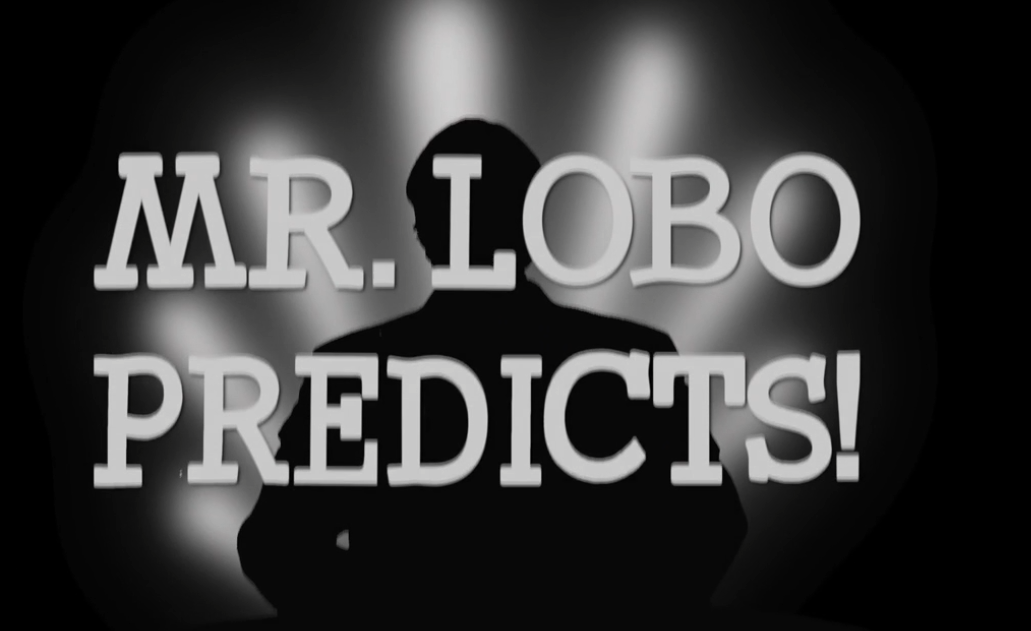
    • The film opens with Mr. Lobo telling us that we've waited 20 years for the next installment and the producers accept no responsibility if the film is "less than subpar." He notes that we've already paid for our tickets so we should shut our blowholes and enjoy the ride. He tells us "they're not bad movies, just misunderstood." Listen, movie, the fact that you know you're a crappy movie does not make it all right to be a crappy movie.
    • About halfway through, we get an intermission with horror hosts Marlena Midnight and Gore De Vol, the latter of whom explains to Millennials what an intermission was and how movie theaters make their money on overcharging for snacks.
    • I've not seen any of these folks' actual shows but they all seem more talented than the people making the actual movie here. Maybe have them do it?
Unsubtle Criswell reference by the guy who plays Criswell in the remake of Plan 9. Yay.

Eventually the feeders do start killing people, including: 
  • A random road worker.
  • members of the film crew (whose deaths go largely unnoticed by the others despite it being like a 5 or 6 person crew).
  • an adult stealing candy from another adult at Halloween (though the scene is played like an adult stealing from a kid or teen, kind of).
  • a woman who somehow thinks the Feeders are children in costumes despite them being like a foot shorter than the shortest kid who would be capable of walking, much less walking alone, on Halloween.
  • An on-scene reporter who is part of a running gag where he can't hear the news anchor talking to him.
  • The scientist with the questionable accent.
  • The FBI agent, who is attacked outdoors at the same hotel as the two stars of the film while they are outdoors using a hot tub, but somehow they don't hear it.
  • Female Derek (i.e., the lady playing Derek in the film-within-a-film, who is only ever referred to by that name as far as I recall) while she takes a shower.
  • Presumably Female Bennet, though that isn't actually shown, after she leaves the hot tub because she's feeling cold, leading me to believe this film was created by an alien who possesses environmental immunity and therefore has never learned what temperatures mean. She also runs right into the FBI agent as Feeders are eating him and they both do a perfectly awful job of falling down, which is something that's kind of hard to screw up.
Insert Hulk Hogan "it's not hot" gag here.

  • A random couple who reference the series V for unknowable reasons.
  • The reporter and other folks at the studio as the alien invasion goes from 0 to entire global collapse in about a tenth of a second.

Of these, the only ones that manage any kind of suspense are the deaths of the FBI agent and female Derek, which at least do manage the most basic of horror movie setups and build a little tension. The rest are either dull jokes or boring exercises in predictability, or both.

There's literally too much stupid in this movie to go over all of it, so I'll just skip to the ending. Spoilers ahead if for some reason you actually give a crap about spoilers for Feeders 3, and if you do, God help you.

Why does a mental hospital have a random collection of national flags on a shelf?


So, we've offed most of the main characters, in as much as this movie has main characters, so we're left basically with two pairings: Derek and the doctor, and the director and his dad Alan.

The doctor hears the reporter's last broadcast and finally believes Derek, so she goes to see him, and he announces that he's figured out why he was left alive: because the aliens actually implanted aliens in him. I can only assume that no one's done, you know, an x-ray on him in the past 20 years, because that definitely seems like it would've shown up and proved his story. He dies via chestburster and the doctor flees.

Meanwhile, the director is feeding his catatonic dad when his dad sees feeders approaching and manages to warn his son. They get surrounded anyway and for some reason the movie throws in some subtitles as the aliens talk to each other, revealing they're two different groups that just decide to work together immediately anyway. That was pointless. Suddenly, Santa Claus shows up with a ray gun like he did in Feeders 2, but equally suddenly, dear old dad calls out to a UFO to kill Santa, so Santa gets blasted with a death ray and dies.

Dear old dad reveals the truth: He is, in fact, himself an alien agent. It's basically just an in-joke poking at what prior reviewers have noted about the franchise: this same guy, Mark Polonia, played the evil version of Bennett (not the good one, that was John Polonia apparently) in Feeders and also played Alan, the dad, in Feeders 2 and Feeders 3. Thus, Feeders 3 tries to mold all this together by claiming that evil Bennett was Alan - he came to observe and report, started a family, got attacked by a different group of feeders who didn't know who he was, got abducted by yet more feeders, returned catatonic, and has only just remembered who he was and now can apparently command both groups of feeders on Earth because this movie is incredibly stupid.


He reaches out to the director and quotes Vader's "rule the galaxy as father and son" line word for word except for switching "galaxy" for "earth." The doctor shows up too and adds, "and daughter," because she is apparently Alan's daughter even though that renders basically all of her reactions in all of her prior scenes completely nonsensical, and Alan and his alien son and daughter walk off into the light as Alan tells no one in particular they have a choice: "Join us and feed us, or pursue the present course and feed us anyway."

More feeder ships arrive, end credits, and Marlena wakes up post-credits after having fallen asleep, evidently from boredom.

Words cannot express how crappy Feeders 3 truly is. I would say that it must be seen to be believed, but that might encourage you to see it, which I do not recommend. The Astro-Zombies films actually have more developed plots than this, and I've ranted at Al for hours about how poorly plotted and nonsensical those films are when he's forced me to watch them. This was dangerously close to Actium Maximus-level bad, saved from that only by the dialogue actually generally being audible and intelligible.

Absolutely awful film. Happy Birthday, Al - the best birthday gift you could get is the knowledge that you have not watched Feeders 3.

Tuesday, July 5, 2022

Al's Birthday Review: Teenagers Battle the Thing

Bob here. It's Al's birthday again. 
Let's get this over with.


Teenagers Battle the Thing, made in 1958, is a film that would have been perfectly acceptable if it in fact invented the Monster Attack Horror genre. It...did not, so it's not acceptable. What it is is a 59 minute, 29 second film that can't bother to to get its butt in gear and have a plot until about halfway through its run time, and...doesn't really pick up from there.

Heck, it's 6 minutes and 7 seconds until the first character other than a narrator actually speaks. That's more than a tenth of the movie.

It isn't until 25:45 that we get our first shot (other than a very brief clip in the intro set millions of years before the movie's actual plot) of what will eventually be our monster in the general vicinity of our main characters. That's close to halfway through!

This is like if you were watching Captain America: The First Avenger and they only happened to mention that World War II was going on at the hour mark. 
Or if you were watching Thor and the entire first half of the movie was just following the science team slowly taking readings and stuff and talking about Norse history for a full hour, without any sign of thunder god hijinks.

Some movies use a slow burn...with this one, the fire actually went out and no one ever bothered to go check up on it.

The plot...allegedly...is that a high school history or archaeology class went with an archaeologist (who rather resembles Jim Crockett Promotions wrestler Johnny Weaver - I should at least get an ad for Let's Go to the Ring! out of this - on a dig, where they uncovered a sealed tomb, unsealed it (of course), and took a mummy, which came to life and went on a killing spree (of all of one person) until they boldly battled it to the death.

That's...pretty much the entire film, right there. There's nothing deeper than that. 
No characters get any deeper characterization than "teenager" or "teacher" or "archaeologist" or, far too late for the movie to introduce new characters, "sheriff." 
There are no subplots. There are no extra touches. 
There is no personal development, not for a single character.  Heck, there's not even some kind of ham-handed moral lesson.

No, what there are instead is a nearly endless series of shots of people slowly walking around. Teenagers Battle the Thing wants you to watch every...single...step of every...single...journey. 

Apparently, the concept of "editing" did not develop until at least 1959.

Get used to walking shots, folks. Lots of walking shots.

The worst offender is probably the mountain climb leading up to the discovery of the tomb, where not only do we see a simply offensive number of shots of people slowly shuffling their way up cliffs, but they make sure to highlight that they're going to get a climbing rope and proceed to not use the dang thing at all, even on slopes that look quite steep where a rope probably would've been a good idea, until they just happen to find an ancient sealed tomb that they, to be clear, had no idea was there and they finally use the rope. What, was it just a rope that granted +3 to Climbing Skill just for holding it?

..but don't worry, once they get the mummy from the tomb and it revives, the Story doesn't pick up at all!  Instead, we're treated to endless discussions of who will go get soda from the store, every step of a walk from the car to the shed as the teacher shows the sheriff where they stored the mummy that escaped, and every single person hopping over a tiny gap in a grove like its the escape from The Mines of Moria.

When we finally see the monster, it's...not worth the wait.

It's not that interesting stuff doesn't happen in the plot, mind. It's just that it mostly happens off camera.
 We do see the monster break into a house and attack a woman (though we cut away as soon as that actually starts), but we only find out later from the Sheriff that apparently someone shot at the creature later that night. 
Weird line in that part, by the way - the Sheriff notes that the shooter must have hit the creature, because there's blood at the creature's camp in the grove, but then says he must've missed because his hunting rifle would've stopped anything on a hit.


The teacher and the archaeologist warn the town (off camera), and, having decided based on slim evidence that the cop's revolver won't hurt the monster, decide to use a fire trap to kill the creature. 

The cop gives the teacher his gun because the teacher, going into the woods, will need it more. Yes, the same gun we've just established is likely useless.


By the way, the cop ends up being attacked by the creature. Maybe bring more than one (apparently useless) gun on a monster hunt? Possibly?

At precisely 58 minutes, 26 seconds of a 59 minute, 29 second film - so almost exactly one minute from the end - teenagers do indeed battle the thing, as they assist their teacher by splashing gas on the thing and setting it on fire with a flare. 

Arrrgh! Why am I invulnerable to bullets but easily defeated by technology that was readily available in the time in which I originally lived but for some reason never killed me then?

...and then the movie just ends.

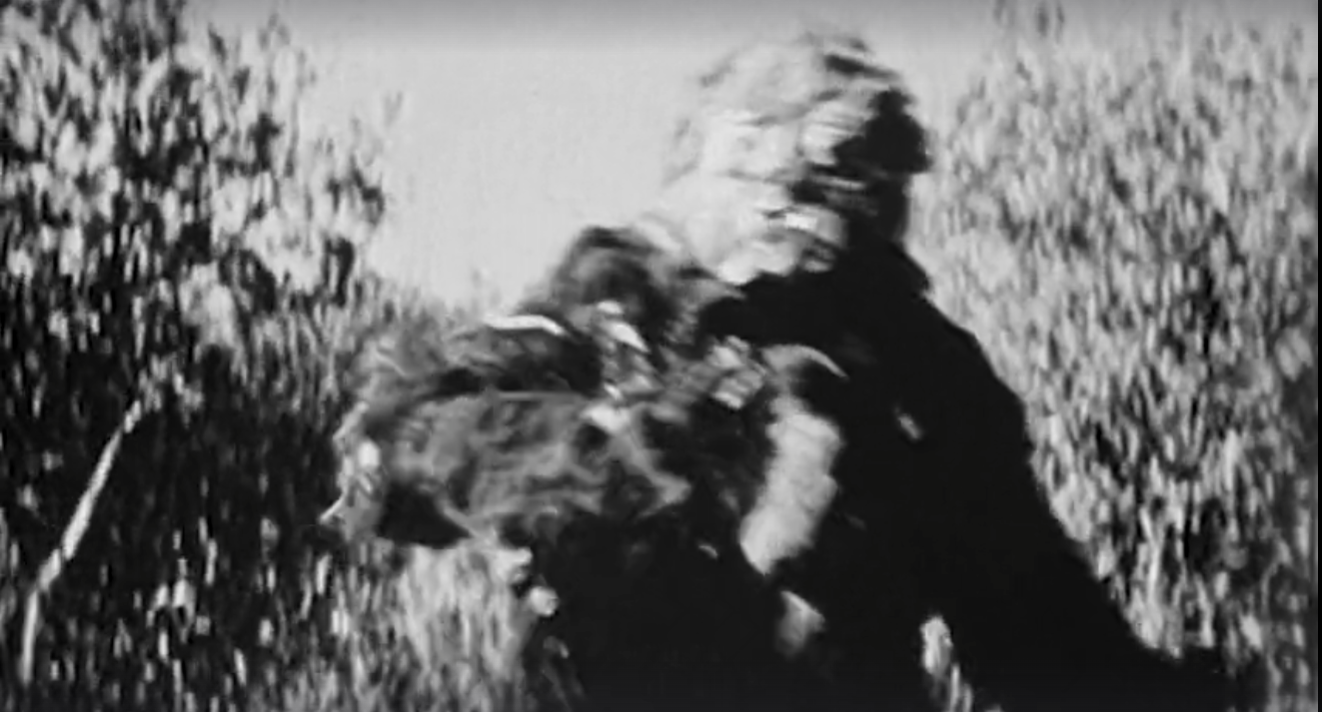
So...yeah. It's not quite false advertising, but still, Teenagers Battle the Thing really gives a mistaken impression of the bulk of the movie. It's more like...


Or maybe...


Yeah. Someone bothered to colorize this thing, add about a half hour more of pretty much unrelated filler, and release it under another title, which is entirely more work than it deserved. 

Worth noting that in no way is this creature Bigfoot, but I definitely did feel cursed watching this, so the title's half right.

All told...this was far from the worst thing that Al's made me watch for his birthday, and at least it was short, but...this is barely a movie. 
It's more like 30 minutes of Intro to Archaeology, followed by about 29 and a half minutes of the very basic outline of a horror film that no one bothered to develop any further before deciding, "Yeah, we're done with classwork for the day and I've got my dad's old, beaten up werewolf costume from Halloween 20 years ago, let's go ahead and shoot that."

Definitely, definitely, definitely do not watch this without the aid of the fine folks at Rifftrax

Happy Birthday, Al.


Monday, July 5, 2021

Al's Birthday Review: Stalker

Bob here. Another year come and gone. No jokes about it this time...I'm just thankful we made it, and I could experience this yearly tradition again. Sorry - I'll leave the somber reflection behind, at least about my actual life. Somber reflection won't entirely go away, though, as the film Al's given me this time is Stalker.


Stalker
 is...a weird film to talk about. Made in 1979 in Soviet-era Russia, it was loosely - very loosely - based on the 1972 novel Roadside Picnic. The general concept in each is similar: in both, characters called "stalkers" enter an area called "the Zone" in which strange phenomena exist following some sort of event. In the novel, the Zone (of which there are actually multiple) is explicitly the result of an alien visitation. It's compared to what forest animals might think of the aftermath of a roadside picnic, thus the name. In the film, it's...less clear. There's mention of a meteorite impact, and that everyone who entered the Zone to investigate disappeared. In any case, stalkers and the Zone are consistent...as is the idea of something which can grant a wish, but is guarded by some kind of extreme danger.


From there...the film and the book diverge considerably. This isn't really a comparitive review, but just for the sake of argument, after having looked up the plot of the book, I rather wish the film had been made to follow it much more directly. That's...largely because the book seems to have bothered to have a plot in which things actually occur, where the film seems to have largely foregone that in favor of slow pans across landscapes and a heavy dose of philosophy. The former is good mood setting but far, far too lengthy. The latter is the heart of the film and actually interesting...but far too infrequent.

But let's rewind. Stalker is the story of the titular Stalker, one of a group of such people who leads people into the area called the Zone to attempt to find a Room (don't worry, there's no Tommy Wiseau) in which they can have their wish fulfilled. Stalker's wife is not pleased with him and his daughter, who he affectionately calls Monkey, is said to be deformed or cursed by the Zone's power. (There's nothing visible on the kid, but she does spend all her time bundled up. Something more obvious presents itself in the end but I'll avoid spoilers. One more minor note, though: in the book, "Monkey" makes more sense as a nickname as the kid's mutation is full body hair.)


Stalker agrees to escort a couple people, who he names Writer and Professor, into the Zone. He gets them across the police lines, though they're nearly caught and face some gunfire (don't worry, though, it's all at a really sedate pace so as to avoid any accidental excitement). Reaching the Zone, they...set about slowly, extremely slowly, wandering through it, with Stalker checking their path by chucking metal nuts wrapped in bandages around. Slowly, the story of Stalker's former teacher, who in the end went by Porcupine, is revealed - he came back from the Zone rich one day, but committed suicide a week later.

Along the way, they do a lot - and I mean a lot - of walking around ruined buildings. Occasionally, Writer or the Professor (more often Writer) expresses doubts about Stalker's leadership or disobeys him and Stalker yells at them. They also very occasionally (but at great length when it occurs) discuss philosophy, revealing more about themselves. These are definitely, definitely the movie's best moments, and honestly, if you trimmed down the film to mostly be the three discussing their varying philosophies and concepts of the Zone and its meaning, and cut like 2/3rds of the aimless near-silent wandering, this film would be awesome. Not even kidding. The philosophical discussions are genuinely fascinating and reveal a lot about the characters, and represent an interesting intersection and confrontation of faith, science, reason, logic, nihilism, and hope.

Is it just me, or do you see an angry face wearing an eyepatch on the back wall too?

That's the trouble with this film. It spends most of its runtime on the wrong part. They got caught up in the idea of having a journey, but the journey is not interesting. Actual dangers are rarely presented or even hinted at beyond Stalker's vague intimations that your every action matters in the Zone - there's just one creepy call to Writer when he goes off Stalker's path, and one weird kindasorta time loop. The rest is...at best, some vague suggestions? Mostly, it's just some dudes stumbling around in the woods or a dark ruined building for a while.

But the philosophy? The conflict of different ideals? That's excellent. Especially as the film goes on, and it gets clearer and clearer that neither Writer nor Professor are being fully honest or, perhaps, even truly know themselves, and as both begin to progressively question both Stalker and that mysterious Room to which they're headed. The varying conflicts between the Stalker and the other characters are interesting, too - the Writer's problem with him is doubt, but the Professor seems to believe but have his own stubbornness that causes problems. A little bit of weirdness towards the last stages of the journey reveals a different side of the Professor, as well.

I won't spoil where the film goes with those elements. Not so much that there ends up being much of a plot, but...where the characters end up is interesting, and is meaningful, and should you choose to go into this film despite the negativity I've heaped on parts of its construction, I'd rather you not miss out on some of the good parts by my spoiling them. Suffice to say philosophies and questions come to a head and there's some rather interesting twists in the closing forty-five minutes or so.

No, no - please, do hurry up.

Oh, yeah, by the way, this thing's over two and a half hours long. Again...it could use some trimming. It's a real shame as the central character conflicts are genuinely interesting and well performed by the three leads - it's just that those don't feel like the focus of the film. The focus appears to be the journey through the Zone, and the Zone is just...not interesting. You could literally have just had the characters pop into the Zone, find themselves right in front of the final tunnel (which features the only meaningful confrontation with the Zone's weirdness in the entire film, though even that is vague), have half their philosophical discussion there, go through the tunnel, and do the film's ending exactly the same way it was done. It'd take about an hour and would be great.

They didn't...so it's really, really dull. Just...much like Hard to Be a God, it's a really well-presented, well-acted kind of dull with great location scouting and mood-setting. But...that's still dull. I'm not asking for the film to be a rip-roaring sci-fi action adventure with danger at every turn. What I am asking is that it have the decency to recognize that perhaps it could hold itself to panning across one waterfall going through a dilapidated old building instead of three or four, and to, say, a solid three shots of Stalker tossing a bandaged-wrapped nut at a log before it figures out that, you know, the audience probably gets that he's doing that. Oh, and maybe consider having the characters discuss philosophy while they walk. Proper philosophers can multi-task. I hear Plato was famous for the way he could whip up a nice kolokythopita while he expounded on metaphysics.


Some final notes:

  • There's a genuinely great visual transition in the film - the early part outside the Zone is in sepia, and the part inside the Zone is all in full color. This brings up some very interesting questions for the viewer at a couple points midway through the film, and especially towards the end, where the color / sepia shifts come in again.
  • At a couple points, characters address the camera directly out of nowhere. What is it with depressing Russian films and people talking right to me?
  • The three leads - Stalker, Writer, and Professor - are similar enough in appearance that in the sepia-toned bits it's actually hard to tell who is who. Writer and Professor are both balding middle-aged white guys, and Stalker is a middle-aged white guy who is not balding but has faded patches of hair that makes it look like he is when seen from a distance in sepia. Fortunately, Professor puts on a hat pretty quickly, and when we get to the full color sections, they all wear differently colored coats.
  • Writer's expounding on why Porcupine actually committed suicide and what it means for the Room is a genuinely great moment in the film and the ultimate summation of his own character. Excellent work there. Stalker's reaction their journey and his thoughts towards the close of the film are terrific too, and a similarly excellent expression of his own philosophy.
I am going to go into this all a bit below, because I'd like to talk about it, but before that, I'll put in my conclusion so you don't have to scroll past spoilers.

I'm still / In a dream / Snake Eater...

Stalker is not a great film. It's a bad film that has a great film in it, fighting to get out. Its greatness is treading water in an ocean of boredom. It occasionally manages to surface for a few moments, only to get pulled under once again by more and more journey sequences that just drag on forever in silence. I'm not sure that I would recommend watching this film, but I'm not sure I can recommend avoiding it either. I guess...maybe watch it, if it interests you, but have the fast-forward button ready and use it liberally?

A film that somehow manages to be dull and interesting at the same time. There's a philosophical statement there somewhere. Happy birthday, Al.

(One last "by the way" - there's also a game based very loosely on the same novel that the film is loosely based on: S.T.A.L.K.E.R. - Shadow of Chernobyl. Aside from the concept of a Zone, a supposed wish granter, and someone called a Stalker, there's almost no similarities in plot between the game, the film, and the book from my understanding. The game also explicitly ties the Zone to the Chernobyl disaster, while the film and book were both created before said disaster.)


**SPOILERS**

Interested in my thoughts on the character conflicts that emerge in the final moments? I'll put them here, but do watch the film if you're going to first. (Thus the spoiler tag.)

An important revelation in the film is what happened to Porcupine. The truth appears to be that he came to the Zone with his brother, but his brother was killed by the Zone and Porcupine came out a rich man, having apparently used the Room's wish-granting magic to make it so. The characters theorize that Porcupine may have intentionally murdered his brother using the Zone (in particular, a region Stalker refers to as the "meat grinder," which must be gone through in a very particular way), and then used the Room's power to gain money.

The Writer, however, theorizes differently. He claims that Porcupine lost his brother to the Zone, but when he entered the Room to make his wish, he intended to wish for his brother to be restored. However, the Room does not grant the wish a person claims to seek, or what they ask for. It grants the innermost desires of their heart. And in Porcupine's heart, it found not a desire for his brother, but for money. Thus, Porcupine was forced to realize that his conscious desires meant nothing, and it is for this reason he ended his life. It wasn't that he wanted his brother dead, it was that he could not make his heart wish for his brother to be alive.

The Writer, confronting this idea, refuses to enter the Room, realizing that he does not know what his heart truly wishes for. This calls back to an earlier conversation in which he started to tentatively question exactly that, though he worded it more at the time as not knowing what to call what he wanted - the words, not the concept. But, confronted with the need to fear what his own heart would reveal, he refuses to face it - or, as he puts it, refuses to subject the world to that mystery.

Meanwhile, the Professor has become convinced of almost exactly the opposite: that one can control the Room's power and that it is therefore inevitable that someone would find it and use it for a great evil. He reveals the pack he has carried for the entire film in fact contains a bomb and he intends to destroy the Room to prevent that. This nicely calls back to the Professor and the Writer's central conflict with each other. The Professor believes the world can be understood and the truth discovered through science, and the Writer believes ultimately truth is the result of argument and is flexible. The Writer also has lost faith his his ability to convince others of things through writing, as revealed through an earlier piece to camera, and this factors in to his doubt of his own ability to understand his own wish. The Professor, on the other hand, believing strongly in the power of fact and proof, of course believes it entirely likely and probable that someone could know what result would come of entering into the Room - and thus, that it is a danger.

What of the Stalker? The Stalker believes in the Room as only good, believing that it chooses those to come and welcomes only those who most need it. He believes that Porcupine was punished for coming to the Room with a selfish heart and his own agenda, anathema for Stalkers, and therefore, to the others' doubts, he expresses that he never considers entering the Room and has no wish of his own. (This, by the way, is a major deviation from the novel as well, in which the Stalker's journey and personality are far, far more focused on his own wish, and actively - and fatally - deceptive to at least one escortee.) He only wants to help others and that is where he finds his joy.

In the end, the Writer's explanations convince the Professor, who disassembles and disarms his bomb. No one uses the Room.


They return to the world beyond the Zone, and the Stalker brings a dog from within with him. The experience distresses the Stalker - he has brought two men through the Zone, believing the Zone welcomed them, but neither believed in the Zone or trusted it to help them. For him the Zone is the ultimate good, an aid to all who need it...but his faith is shaken by the fact that those chosen by the Zone have rejected it, and in his words, that it did not work for them. His wife, who opposed his journey in the beginning, even seeks to offer to go herself to bring back his faith, but he refuses - not because she is unworthy, but because he now doubts as well - what, he asks, would he do if it did not work for her? He mourns the lack of belief of those he escorted, and what it means for the world if none can believe.

But interestingly, as well, we see a few moments during those closing parts where the film is once again in color. These are while the Stalker walks with his wife and daughter on a shoreline (in the view of a nuclear power plant, perhaps, from the look of things), and a final shot of his daughter demonstrating telekinesis, in pretty much the only actual effects shot in the movie. What do those mean? I'm not sure I have the answer. I don't think it means they are in the Zone...but maybe it is less about the Zone than about belonging?

For the Stalker, the Zone is belonging. The Zone is home - more than the outer world. It is vibrant to our eyes, I think, because it is life to him - it is more alive than the rest of his life. So perhaps the flashes of color in the post-Zone segment represent something of that - perhaps they are an expression of a seeking, at least, to love his own world and to seek to find life with his family, rather than only in the Zone. Or...perhaps I am wrong. The Stalker does wonder why he does not take his family into the Zone earlier. Perhaps he does. It is difficult to tell the precise sequence of events in the end (and the telekinesis shots come completely out of nowhere).

Leaving that aside...what, then, is the film's final philosophy? I do not think it makes a choice. Each of the men raises interesting points, and each argues theirs. I don't think the film outright says any are right. The Stalker's faith is wounded - but we are never actually shown he is wrong. The Writer seems to convince the Professor, and perhaps shake the Stalker - but he himself is repeatedly shaken, and even fights to protect the Professor's bomb from the Stalker at one point, even though the Professor's reasoning for wishing to destroy the Room is at odds with his own explanation. The Professor raises interesting points about the danger of a wish, but inflexibility may have robbed him of a chance for a great good, even once he discards his plan, swayed by the Writer. The Stalker's wife, too, gets a chance to philosophize, stating that a bitter happiness is better than gray, dull life, and that without the misfortunes she has experienced alongside the Stalker, there would be no hope either.

I think the film leaves it, somewhat, to you. There are reasons to think like each of the characters, and reasons to doubt them as well. The Stalker is the most clearly altruistic, and is generally treated as reliable throughout the film...but he is wrong at times as well, and as the others ask, does he really understand the nature of the Zone? Do the rules he states actually hold true? The Writer is good at expressing his views, but is a view well-expressed necessarily right? And as a point of fact, his own self-analysis is proven false by the very fact that he is able to use words to convince the Professor and shake the Stalker. It is easy to be caught up in his reasoning and lose sight of the fact that he has no direct knowledge either. As for the Professor, his reasoning similarly makes sense...a wish would be dangerous if any had access to it, without morality or good principles to rely on...but what if the Writer is right that one cannot control their wish, or the Stalker is right that the Zone chooses who approaches? True, none of them has their wishes granted and that shakes the Stalker's faith - but it also means that no evil wishes were granted, nullifying the worries of the Writer and the Professor.

In the end, none of the three leads fully sees their scenario come to pass. What would've happened if one entered the Room is left to the imagination. What would've happened if the Professor set off his bomb, as well.

I don't know that I like it that way. When you put a wish in a movie plot, shouldn't you show it? But then, that's not the point of Stalker. The point isn't the answer but the question, I think. It isn't what I'd choose for a film, but it's interesting all the same.

All told...Stalker is an interesting but dull film, as I said above. A bit of a paradox. I'm glad I watched it but at the same time I'm not sure I can really recommend it. I'm glad I watched it but I'm not glad I watched all of it.